


The Silly Walk Tunnels form an underground network of tunnels covered in graffiti and illuminated at night. Tour this fun experience.


Genneper Park spreads across Eindhoven’s outskirts. Discover lakeside walking trails, fishing spots and boating within the grounds.


Dutch electronics giant Philips comes to life at the Philips Museum. Interactive displays showcase the company’s product evolution and innovations.


Eindhoven Zoo sits right in the city center. Monkeys, reptiles, birds and numerous other species call this urban wildlife sanctuary home.
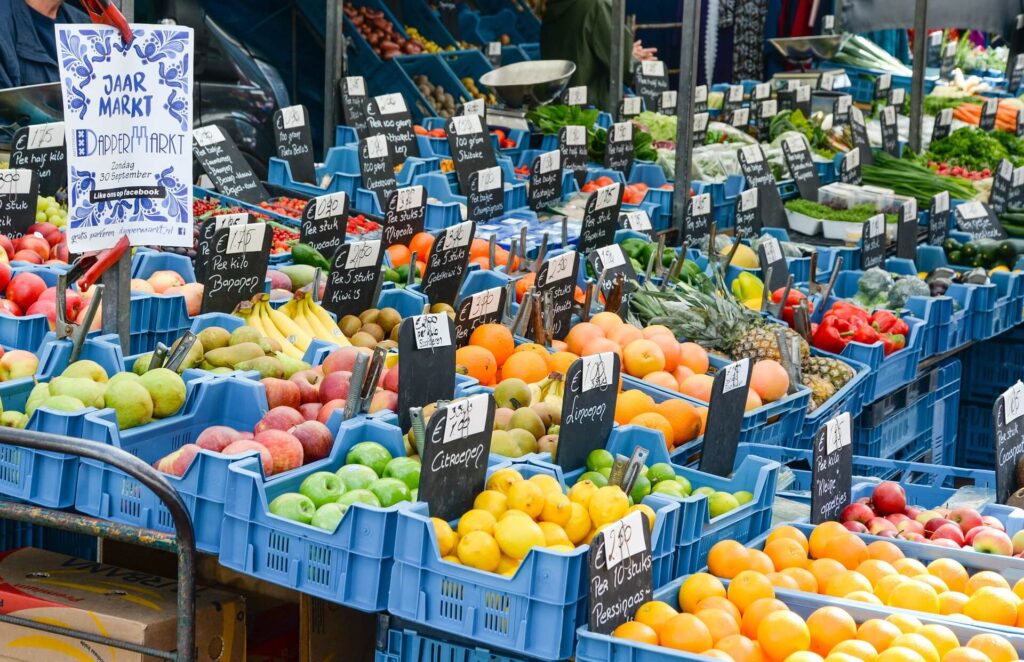
Vershal Het Veem brings together local producers. Fresh, regional ingredients line the stalls. Grab your bags and start shopping.
The building looks like it landed from somewhere else. All curves and no corners.
Eindhoven built a shop entrance and dared everyone to treat it as a landmark. The Blob positioned on the 18 Septemberplein in the city centre, open to the street at any hour, though the glass skin earns its reputation after dark, when the light comes on and the square fills with people waiting on each other. Entry costs nothing and no queue forms. You look, then move on.
The building opened in 2010 as part of a wider effort to revive the old shopping district. Italian architect Massimiliano Fuksas designed it as the centrepiece. It reads as a spaceship but hides a reworked office block, wrapped in a curved shell of glass and steel that blurs the line between wall and roof. The name stands for Binary Large Object, a nod to its refusal to settle into a fixed shape.
In the right light the skin turns almost soft, while the metal panels swallow reflections of passing cars and drifting cloud. On the pavement, people circle it with their phones, chasing the full shape from every angle and never quite catching it. The form shifts as you move, so no two viewpoints agree.
A coffee shop hums on the ground floor, its curved glass bending the street outside into something warped and unfamiliar. Peer down through the floor cut-outs and daylight drops straight into the bike garage below, where well over 1,500 bicycles park out of sight.
The tower stands empty now. No bells chime. But the presence remains undeniable.
Pierre Cuypers sharpened his craft on this neo-Gothic church years before the Rijksmuseum, leaving Eindhoven with twin 73-meter towers that still command the skyline. It sits on Catharinaplein, two minutes from the central shopping streets. Entry costs nothing. Time your visit around Saturday concerts and Sunday Mass rather than during them. Modest dress suits a working parish.
A medieval church stood here from the 14th century until fire and neglect razed it. Cuypers began the replacement in 1861 and finished in 1867, realizing a vision laid out by Catholic writer Joseph Alberdingk Thijm. Two wartime bombing raids gutted the building, craftsmen later rebuilt the interior and reglazed the windows.
The northern David tower bristles with turrets and battlements while the southern Maria tower tapers to a slimmer, gentler point, a masculine-feminine pairing Cuypers cut into the stone. Inside, one of the two organs often fills the nave, the larger ranks among the country’s biggest, with more than 5,700 pipes. A 5-octave carillon rings out over the square from the tower above. Stained glass by Charles Eyck and Pieter Wiegersma, installed after the war, scatters colored light across the floor. Rose windows echo the breaking wheel that marks Saint Catherine’s martyrdom.
On a Saturday afternoon at 3pm the “Muziek in de Cathrien” series packs the pews, an unhurried crowd settling in for the acoustics.
The Silly Walk Tunnel transforms a plain Eindhoven underpass into a 130-metre homage to the daftest sketch British comedy ever produced.
Explore it beside Eindhoven Centraal, where a short pedestrian route links Fuutlaan to Professor Doctor Dorgelolaan. Entry costs nothing and the tunnel never closes. The mural honours the Ministry of Silly Walks, the 1970 Monty Python’s Flying Circus routine in which John Cleese plays a civil servant flinging his legs into impossible angles.
Eindhoven’s municipality commissioned the graffiti duo Studio Giftig, Niels van Swaemen and Kasper van Leek, who repainted the former Dommeltunnel in 2016. Cleese himself showed up for the opening. His signature still marks the wall near the entrance, small enough that most cyclists rattle past without noticing the scrawl. Inside, the walk unfolds across 48 frames lifted from the “Face the Press” episode, with a grinning Cleese portrait at each end pointing the way. The panels break the movement into stages you can copy while tossing in accessories along the route: a briefcase, an umbrella or a bowler hat.
Sound carries oddly here, so your footsteps echo while commuters stride past on autopilot, ignoring the absurdity the artists sprayed around them. Attempt the walk yourself and you’ll feel gloriously self-conscious for about 4 seconds before committing.
The factory walls still stand but the machines are all gone.
Strijp-S turns Philips’s old walled factory quarter, once closed to everyone but its workers, into Eindhoven’s densest pocket of design and nightlife. One stop by train or a 15-minute walk northwest of the centre brings you in. Its own Strijp-S station and buses 401 through 403 stop at the door. The district never closes and costs nothing to wander. Aim for a weekend afternoon, or come on the third Sunday of the month, when the FeelGood Market fills Ketelhuisplein.
Anton Philips raised his first glass factory here in 1916. For decades residents called the guarded site “the forbidden city”, since only Philips staff could pass the gates. When the company drifted toward Amsterdam through the 1990s, the municipality bought the roughly 25-hectare grounds and handed the cavernous halls to designers and makers instead of demolition crews.
Walk the Torenallee, the broad central promenade, then look up. Landscape architects trained the plane trees into forked, V-shaped crowns that most people don’t see.
The industrial past shows in the fabric, raw brick, exposed ductwork, the white Klokgebouw under the blue clock. Skateboard wheels clatter and echo inside Area51, the largest indoor skatepark in the Benelux. The Veemgebouw holds a food hall and a brewery tasting room. Nearby, the Trudo tower carries a vertical forest of 125 trees and thousands of shrubs across its balconies. Grab dinner at Radio Royaal, set in a former assembly hall.
Genneper Park hands Eindhoven something few cities keep so close to the center, real countryside a short bike ride away.
The park spreads across the city’s southern edge and ranks among the largest in the Netherlands. Two small rivers, the Dommel and the Tongelreep, thread through it. Buses 7, 317 and 318 stop nearby. Admission costs nothing. The paths stay open all year, though late spring shows the meadows at their best.
The Genneper Watermolen anchors the park’s history. Records name a grain mill here in the 13th century, fire later destroyed it before builders raised the current one in 1587. Vincent van Gogh painted the mill 4 times in November 1884, while living in nearby Nuenen. Cross to the grassy bank facing the mill to find a copper marker set into the ground, pinning the exact spot where he planted his easel.
Volunteer millers still work the mill, grinding organic grain into flour and pancake mixes for a small shop out front. Just beyond, the Genneper Hoeve keeps cows, pigs and hens on a small organic farm where children crowd the fences. History fans can step into the preHistorisch Dorp, an open-air museum recreating Iron Age and medieval villages. The Paviljoen serves regional dishes and Brabant beers, with mini golf for restless afternoons. A signposted loop of roughly 5km traces the meandering Tongelreep. The stream’s low murmur follows you the whole way.
The Van Abbemuseum ranks among Europe’s first public museums built for contemporary art, funded entirely by cigar money.
Located at Stratumsedijk 2, on the east bank of the Dommel in central Eindhoven. Adults pay €16, students €8 and children under 13 enter free, a family pass costs €32. Visit on a Tuesday afternoon between 3-5pm, when admission drops to nothing. Henri van Abbe, a local tobacco industrialist, sold his collection to the city in 1934 and had his factory fund the building, which opened in 1936.
Architect Alexander Kropholler designed the original symmetrical galleries. In 2003 Abel Cahen added an extension crowned by a 27-metre tower, inaugurated by Queen Beatrix. Ride the elevator between floors and it sings. The sound installation turns a routine transition into the oddest moment of the visit.
Inside, more than 3,000 works trace art from 1900 to now. Picasso, Chagall, Mondriaan and Kandinsky anchor the modern rooms, while the museum holds one of the world’s largest collections of paintings by El Lissitzky. Contemporary voices such as Marlene Dumas, Iris Kensmil and John Körmeling push the displays past the usual gallery script. Recent hangs invite you to touch, smell and listen rather than simply look, with Braille texts, scent stations and soundscapes threaded through the wing.
The Philips Museum tells a 130-year corporate story through objects you can switch on, spin and set humming.
Situated at Emmasingel 31 in central Eindhoven, inside the original factory where the company began. The museum opens Tuesday through Sunday from 10am to 5pm, plus Mondays during Dutch school holidays. Adults pay €12.50 and children aged 4 to 17 pay €6, while a free window opens Tuesday afternoons from 3:30pm outside school holidays. Your ticket includes an audio tour in several languages, German and English among them.
Gerard Philips lit his first light bulbs on this spot in 1891. From that single product the company branched into radio, X-ray imaging, television and eventually the compact disc before steering toward healthcare in recent decades. The galleries trace that arc without drowning you in dates.
Move indoors and you shift through a product timeline that runs from a 1927 radio to some of the earliest television sets, then reach hands-on stations where you can test gadgets that have all but vanished from daily life. Look for the electric shavers, more than 80 of them in one long case, most visitors walk past in seconds. Each one marks a small shift in how a common object felt in the hand. Families chase clues with UV torches, play the Mission Eureka tablet game and build something of their own in the kids workshop. A newer section turns to AI.
The DAF Museum charts a Dutch metal shop’s climb from ladders to heavy trucks, with a strange sideline in small cars.
Operating from Tongelresestraat 27, about a kilometre from Eindhoven’s central station, with bus line 5 stopping right outside the door. Welcoming visitors Tuesday through Sunday, 10am to 5pm. Adults pay €14.50, students €9 and children aged 5 to 15 €7, while under-4s and Museumkaart holders enter free.
Brothers Wim and Hub van Doorne founded the firm in 1928, first shaping metal into ladders, cabinets and window frames before it turned to trailers and trucks. In 1959 the DAF 600 arrived carrying the Variomatic, the first continuously variable transmission to reach a production car. Volvo absorbed the passenger car division in 1975, which pulled the DAF badge from showrooms for good.
Most visitors make straight for the vehicles and stride past the recreated 1930s village square on the ground floor, where a replica of the founders cramped office shows how modestly the company began. Beyond it wait more than 100 machines spanning 1928 to today, over 50 truck models, a wall of passenger cars, an engine gallery and prototypes that never reached the road. The trucks dominate, their scale surprising up close, while the boxy little Daffodils reward a slower look.
Eindhoven Zoo squeezes elephants, tigers and a water playground onto a compact estate that rewards families far more than animal purists.
The zoo occupies the Gulbergen estate near Mierlo, a 30-minute bike ride from Eindhoven’s center. Come by car, since buses drop you a long walk from the gate. Adult tickets run in the mid €20s, with online booking cutting the price a little. Paths stay flat and stroller-friendly. Spring and early summer make the best window for a family visit.
The park opened in May 2004 as “Dierenrijk Europa”, stocking only European wildlife. The 2007 arrival of Siberian tigers pushed the collection toward Asia and retired the “Europe” tag. In 2024, its 20th year, the owners rebranded it Eindhoven Zoo to signal broader ambitions in conservation and education.
Most visitors wander past the entrance without realizing they cross the Brabant farmhouse, a holdover from the agricultural business that once worked this land and whose barns still do quiet duty inside the park.
The noise hits first, chimp chatter at feeding time tangling with shrieks from the splash pool. More than 60 species share 16 hectares, from rhinos to a huddle of penguins. Short distances and low barriers put you at eye level with the animals, close enough to skip the usual squint across a moat. Keepers narrate feeding presentations through the day. Playgrounds thread between the enclosures, where parents claim benches, while kids storm the giant slide again.
You smell Vershal Het Veem before you see it, the former Philips warehouse now packed with coffee roasters, butchers and a brewery.
Navigate to Torenallee 86 on Strijp-S, the creative quarter northwest of the center and a short bus or bike ride from the station. Most vendors trade from mid-morning until evening, so a late lunch beats an early start. Entry costs nothing beyond what you order.
Philips raised the Veemgebouw during the Second World War as a storage depot. Its low ceilings and small windows ruled out apartments, so when Trudo acquired the building in 2009, the developer filled it with food and craft instead. The hall opened at the end of 2015. In 2024 the hospitality group STR’EAT took over much of the floor.
From the street, the building’s rounded corners soften an otherwise blunt industrial frame, while inside the concrete columns still carry the load they always have.
Today an Albert Heijn shares the ground floor with a butcher, a Wine & Nuts counter, an olive specialist and Brouwerij Het Veem, whose bottle shop stocks around 700 craft beers. Kitchens plate burgers, soups and Indonesian street food. Weekends pull the densest crowds, so a weekday visit buys you elbow room.
Here’s an outline from key locations:
Cars, buses and trains, the triumphant trio of travel. Providing a variety of choices:

For seamless travel, meet your flight-booking wizards.
Choosing accommodation is like selecting a travel companion—it shapes your journey.
Discover Cars, Buses, and Trains for a journey as memorable as your destination.
Online ticketing platforms have revolutionized travel and entertainment experiences.
Simplifying transactions and currency exchange for a smooth travel money experience.
Credit cards offer benefits like rewards and are useful for easy transactions or purchases.
Providing comprehensive coverage and protection for travelers globally.
Encrypting your connection, hides your IP address, and defense against cyber threats.