

Castle of Tamarit crowns a Mediterranean hilltop in Tarragona province, where architecture meet blue horizons.

Hot sand squeezes between your toes as you race toward waves. Build sandcastles until tides reclaim them, then hunt for shells in pools.

Botigues de Mar browse local boutiques for one of a kind finds, waterfront restaurants offer catches alongside local drinks.
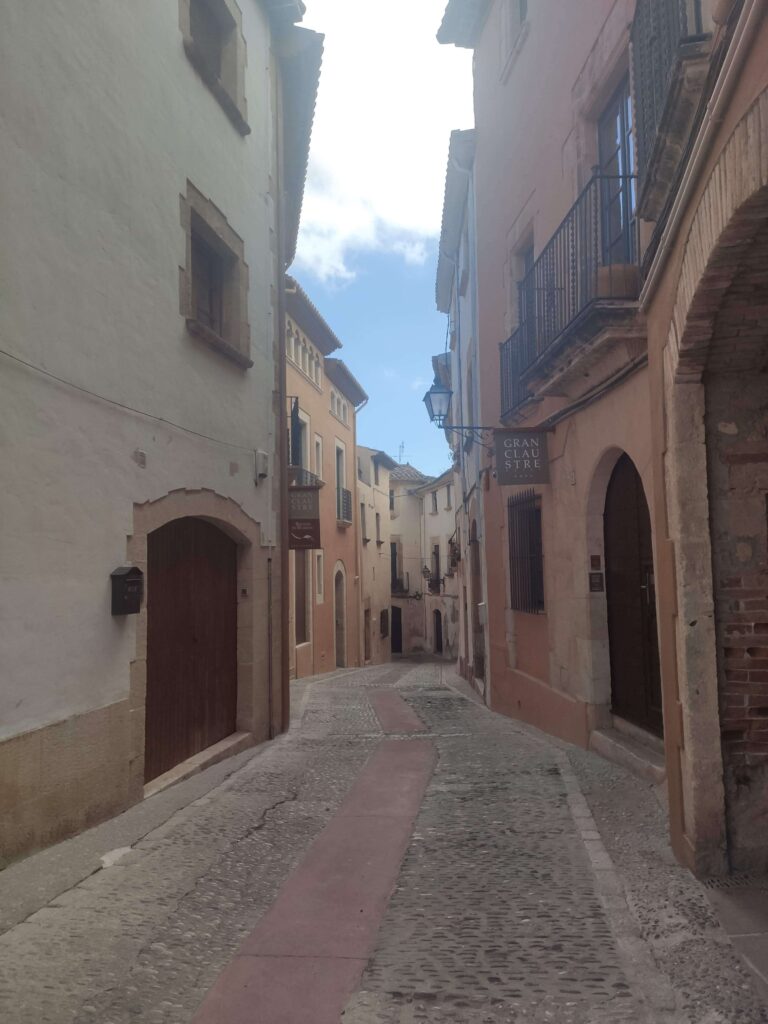
Altafulla’s old town threads cobblestone paths between medieval walls and castle ruins. Each turn reveals new views until you reach the beach below.

Catamaran sailing transport you into liquid freedom. Travel through blue water, while the deck gives you front row seats and the coastline unfolds like an ancient map.

Iglesia de San Martin holds 800 years of prayers within Gothic stone walls. Sunlight filters through arches while carved details tell stories of craftsmanship.

Monument Human Tower captures Tarragona’s spirit. Real castells still rise in nearby plazas where locals balance courage with old tradition.

Roman Villa del Munts brings imperial luxury back to life. Walk floors where wealthy Romans escaped summer heat two thousand years ago.

Locals shape clay into pottery or hammering silver into jewelry. Each handcrafted piece connects you to Catalonia’s traditions spanning generations.

Candlelit tables overlook waves that catch the sunset. Fresh seafood pairs good with regional wines and Mediterranean breezes.
Tamarit holds the finest promontory on this coast and opens only for weddings.
Walls sit on a rocky promontory at the south end of Altafulla beach, 13 km from Tarragona. Private owners run the complex as a wedding venue, which rules out tickets, hours and interior access. Looking costs nothing. Trains halt at Altafulla-Tamarit station. Bus line 12 drops you beneath the walls. Come late afternoon for the light.
Records name Tamarit from the 11th century, when counts of Barcelona pushed their frontier south and handed this coast to Bernat Amat de Claramunt, first viscount of Tarragona. Behind the locked gates stands the Romanesque church of the Assumption, three naves under a barrel vault, among the earliest survivals of that style in Tarragona municipality. Troops wrecked much of the site during the Reapers’ War of 1640. American collector Charles Deering bought the ruins in 1916 and rebuilt them with painter Ramon Casas advising. Heritage protection followed in 1988.
Most visitors shoot the castle from Platja de Tamarit. Walkers earn a better angle on the cami de ronda, GR-92, threading the pine woods of Bosc de la Marquesa from La Mora past a round watchtower, until the castle appears whole, keep, wall and sea at once. Round the headland lies Cala Jovera, which locals call Cala del Castell, 90 metres long and 20 wide, with no bar, no showers and no lifeguard. A rocky outcrop shelters the mouth, so the water stays calm and shallow.
In front of the castle, waves knock through holes in a low offshore rock.
Altafulla kept 1 km of open sand while the Costa Daurada went high-rise.
The sand lies in Baix a Mar, 11 km from Tarragona. Access costs nothing year-round. Blue Flag certification disclose water quality, alongside showers, sunbed rental, summer lifeguards and an chair for assisted bathing. Street parking nearby runs 1.50€ per hour from mid-June to late September, up to 6 euros for a 4-hour maximum stay. June and September deliver warm water without the August crush.
Low whitewashed buildings line Passeig de Botigues de Mar, 18th-century stores where merchants kept cargo bound for the colonies and fishermen stored nets and tackle. Their front doors originally faced the village, with their backs to the sand. Fishing boats rigged with lateen sails still lay hauled up on the beach until the 1930s. Families turned those stores into summer houses in the early 20th century, leaving a seafront of shuttered doorways instead of hotel blocks. Tourist development later swallowed most of the quarter, but the front row keeps its original face, window frames mostly painted blue. Poet Josep Carner called them houses with blue eyes. Altafulla protects the row as a local cultural asset.
Club Maritim Altafulla rents sailing gear from the northern end of the sand. Beyond it, a short walk north leads to Els Munts, a 1st-century Roman villa now on UNESCO’s World Heritage list. Turn south instead and the Gaia River ends in a small salt marsh sealed from the sea by a sandbar, a reserve for songbirds with squirrels in its pines. Thirty minutes along the waterline brings Tamarit Castle into view, an 11th-century fortress on a headland above a cove. Back on the promenade at 8 in the evening, the beach empties as benches fill, older couples settling into the same few seats each night.
In July and August, a plain hut in Parc de Voramar lends beach reads as Bibliomar.
Botigues de Mar translates as “Shops by the Sea”.
The white, low-slung houses line Platja d’Altafulla in Baixamar, the seafront quarter 16km from Tarragona and a few minutes walk from Altafulla-Tamarit station. Walking the promenade costs nothing at any hour.
Guided tours of the quarter need booking through the tourist office. Merchants and fishing families raised the buildings during the 18th century to hold nets, boat gear and cargo bound for the colonies. Families converted them into summer homes early in the 20th century. Repaving in 1994 produced today’s promenade, heritage protection now covers the surviving facades.
Halfway along, one house climbs 2 floors above a squat square tower and throws a stone arch over to the houses opposite. Most miss the carved stone window frames and the fortress air that crossing lends the entrance.
Whitewash covers almost everything, cut by marine-blue shutters. The detail led poet Josep Carner to call them blue-eyed houses.
Terraces open onto the walkway at lunchtime, when the smell of rice and seafood carries further than any menu board. Residents hose sand off their steps late in the afternoon, working around sunbathers parked almost against the walls.
Platja d’Altafulla runs roughly 1,100m, so the walk continues toward Cala Jovera and the Tamarit castle headland.
Altafulla’s Vila Closa packs a castle, medieval walls and 18th-century merchant houses into a 15-minute climb.
The town holds high ground above Costa Daurada beaches, up the coast from Tarragona. Nobody charges for the streets. Guided walks from the tourist office cost roughly 5 euros, run 90 minutes, include Sant Marti church and need booking ahead. Late afternoon suits the climb, once the hill loses its heat.
Origins reach back to the 11th century, when this coast answered to the County of Barcelona. Real money came later. Merchants shipping farm produce toward Spain’s colonies rebuilt the fortifications and the church during the 17th and 18th centuries. Most facades inside the walls therefore date from the 1700s. Catalonia declared the ensemble a national cultural asset in 1998.
Two squares anchor Vila Closa. The upper one, boxed in by castle, rectory and Sant Marti, claims some of Catalonia’s finest acoustics, filled on summer nights by voice recitals and chamber concerts. Placa del Pou sits lower, around a covered well and remains of one medieval gate, with a porticoed early-19th-century town hall and matching noble houses. In one corner stands Marti Royo’s life-size terracotta castell, the human towers Catalan festival teams still build. The lanes between the two climb steeply enough that most visitors stop at least once on the way up. Two corner bastions survive, the wall line clearest along the western side beside the castle.
Behind Sant Marti church rests a blunt block of Roman stone.
Altafulla turns away from the beach, sail out by catamaran and the town finally faces you.
Club Maritim Altafulla launches straight from sand beside the Gaia river mouth. Non-members pay 15€ per hour, members sail free and 10-hour courses start at age 13 for 160€. Larger cruise catamarans work the coast from Tarragona, Salou and Cambrils, running 2 to 3 hours with drinks poured aboard. Summer brings steadiest wind, though spring and autumn trade heat for emptier water.
Coastal law forced demolition of the original clubhouse, so members rebuilt and reopened in 1977. The club still runs as sailing school rather than tour operator, which explains why Hobie Cats outnumber sunloungers.
Sound tells you when the trip properly starts. Crew cut the engine, talk fades, someone reaches for music and twin hulls settle into a flat rhythm no monohull matches. Most operators drop anchor for a swim before turning back. From the water, Altafulla’s walled old town climbs the hill above the sand. Tamarit castle rises on a rocky headland, walls dropping toward the sea, closed to the public and best seen from exactly here. Ruins of Els Munts, a Roman villa, hold the slope behind the beach.
Hobie Alter designed the Hobie Cat to launch off sand, so Altafulla’s club needs no harbor.
Sant Marti has ruled Altafulla’s walled hilltop since 1705, staring down the Montserrat castle next door.
Placa de l’Esglesia fronts the church, a short climb from the seafront. Interior access comes with Mass or with guided Vila Closa walks, which you book through the tourist office for a small fee. Cover shoulders and knees. Spring and autumn mornings spare you summer glare.
Records name the parish as early as 1194. Builders laid the current church’s first stone in 1701 over an older Romanesque temple, reusing medieval material. Violence in 1936 stripped much of the interior. The Montserrat family, marquesses of Tamarit, rest inside.
Outside, fluted pilasters frame a sober neoclassical portal beneath a niche holding Saint Martin of Tours, while the bell tower beside the facade never reached completion. Neighbors crossing the square tend to pause at the portal, letting their eyes adjust before stepping inside.
Footsteps ring through 3 naves that form a Latin cross beneath an octagonal lantern and dome. The Santissim chapel guards a 1745 baroque altarpiece by Reus sculptor Josep Vila and Valls gilder Francesc Morales, with Sant Isidre’s chapel close by. Below, the crypt opens onto old funerary rooms that restorers recovered in modern times. Sacred music concerts occasionally fill the nave.
Circle behind the church and you’ll find a Roman-era block of Colsero stone.
Here’s an outline from key locations:
Cars, buses and trains, the triumphant trio of travel. Providing a variety of choices:

For seamless travel, meet your flight-booking wizards.
Choosing accommodation is like selecting a travel companion—it shapes your journey.
Discover Cars, Buses, and Trains for a journey as memorable as your destination.
Online ticketing platforms have revolutionized travel and entertainment experiences.
Simplifying transactions and currency exchange for a smooth travel money experience.
Credit cards offer benefits like rewards and are useful for easy transactions or purchases.
Providing comprehensive coverage and protection for travelers globally.
Encrypting your connection, hides your IP address, and defense against cyber threats.