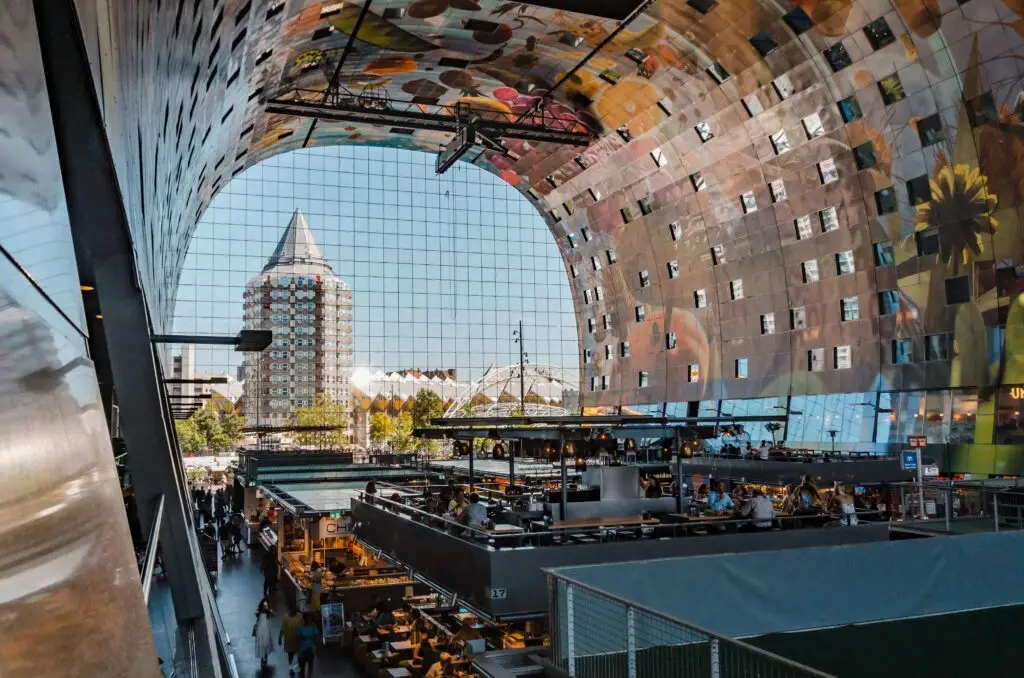
Rotterdam’s Markthalle sits in the City Center’s Heart, where fresh products pile high. Snacks tempt from every stall, while drinks flow freely.

The Cube House designed by Dutch Architect Piet Blom, tilts at impossible angles. 39 Individual Cubes stack like dice across the skyline.
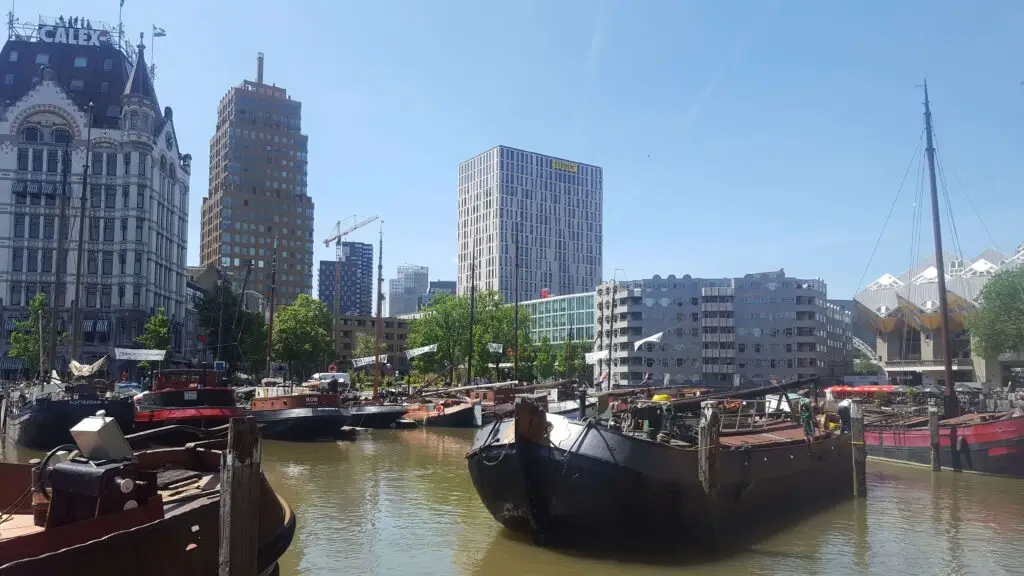
Rotterdam’s Old Harbour transformed into a cultural center. Restaurants line the water, parks sprawl along the docks and harbor views. Ready to play a Game?

The Erasmus Bridge sweeps cables across the Nieuwe Maas river, built in 1996. Enjoy a Harbour Cruise with the city unfold in front of you.

The Euromast Tower rises 185 meters high, offering 360 degree vision. Zip lining available, while rock climbing challenge you to scale higher.

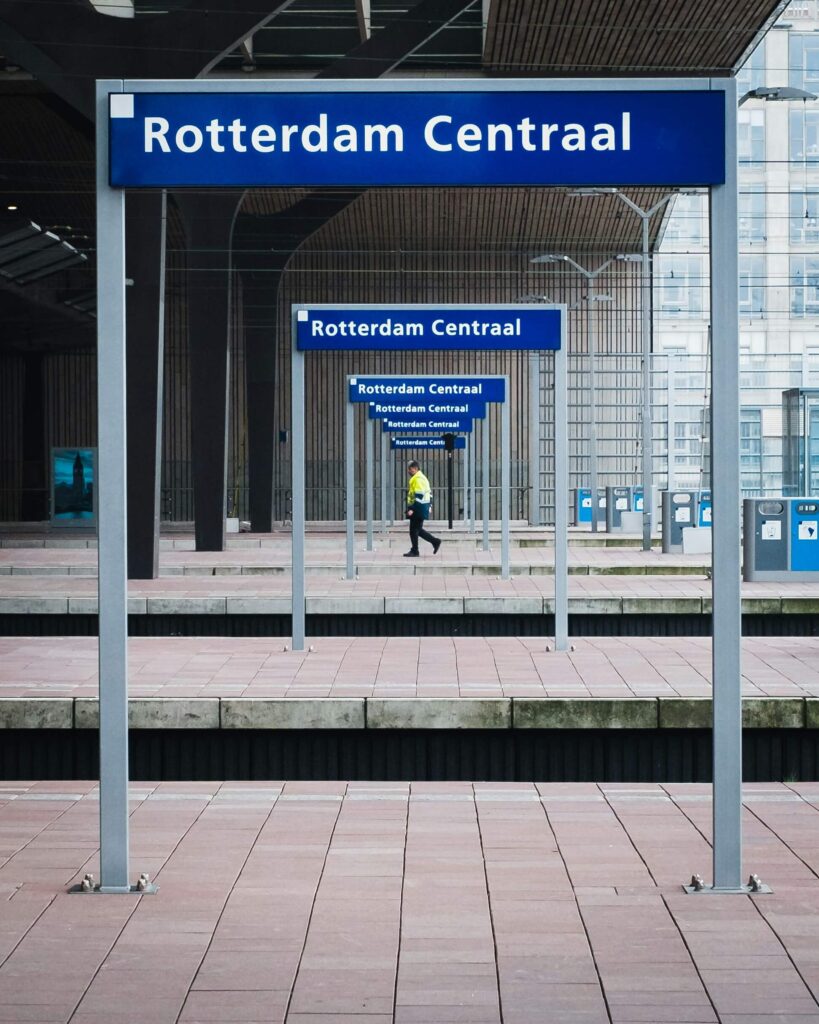
Rotterdam Central Station connects local and international trains as the city’s main hub. Start a Food Walking Tour steps from the platform.

Witte de Withhof pulses with creative energy. Exhibitions rotate, while artists claim walls to display their work and bookstores draw readers into corners.
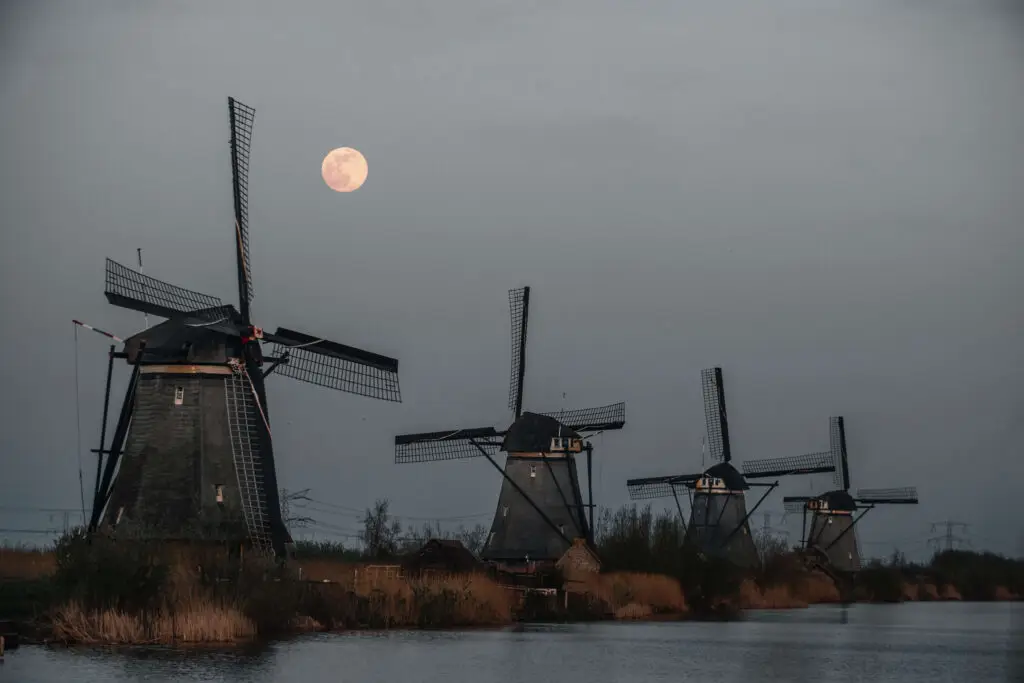
The Windmills of Kinderdijk earned UNESCO World Heritage status. The Region preserves 19 Windmills standing strong for over 300 years.
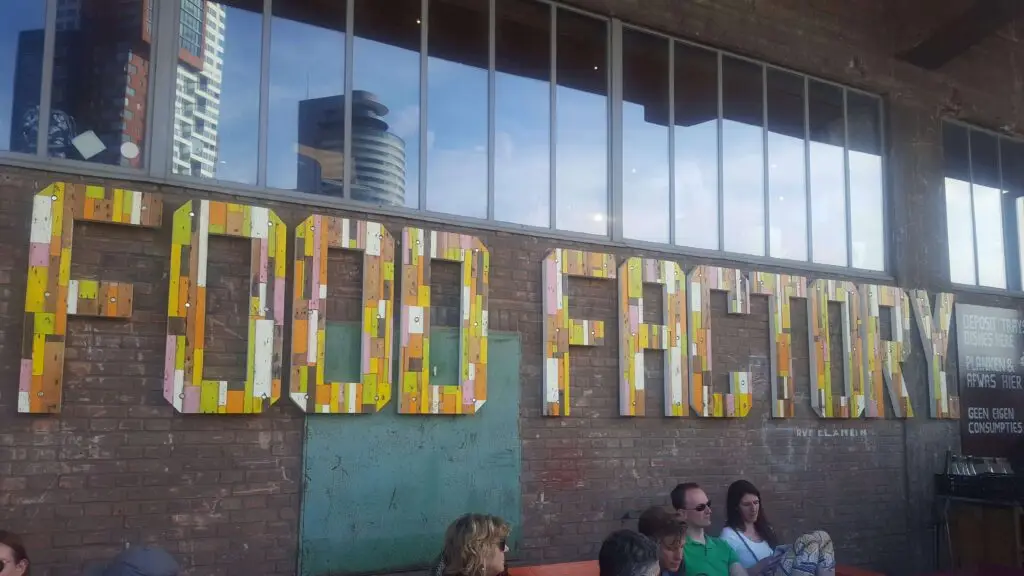
The Fenix Food Factory packs local vendors under one roof, selling products made right here. Otherwise hop on a Water Tour perhaps with a tasty Beer?
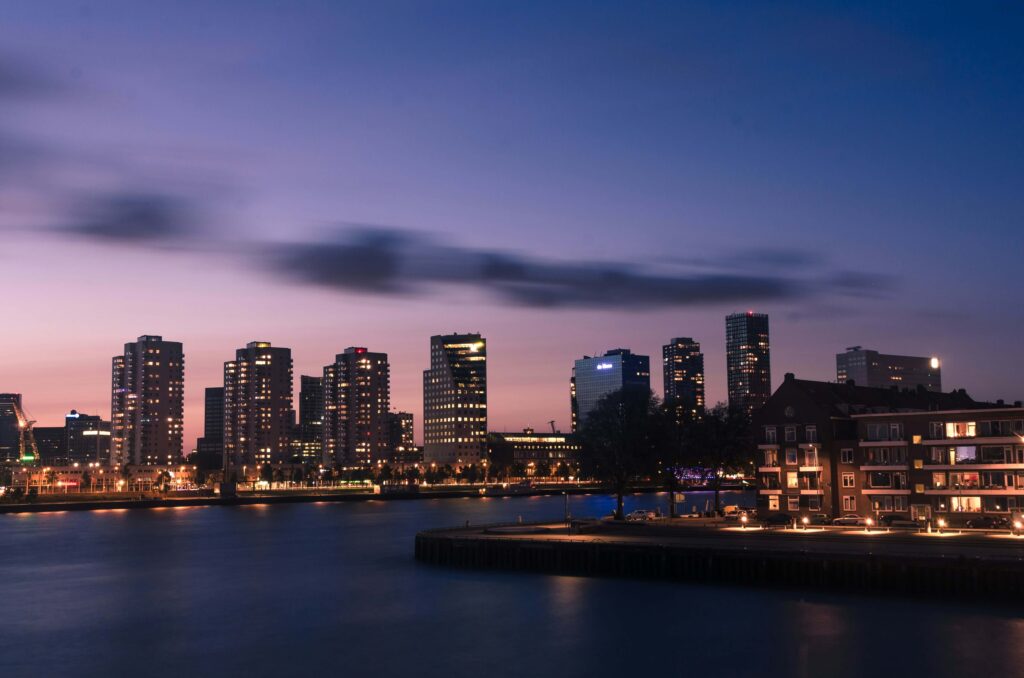
Rotterdam’s Markthal stops you before you even step inside.
Near the Grote Kerk and Piet Blom’s Cube Houses in Laurenskwartier, the market beside Blaak Station remains free to enter seven days a week. Despite the tourism traffic, locals still use it. Mornings are busiest around the produce stalls. Most vendors trade until 8pm, though individual stalls keep their own hours.
Before the Markthal arrived, an outdoor market had operated here since 1947. A Dutch law banning the outdoor sale of meat and fish triggered the 2004 design competition. MVRDV’s winning design led to five years of construction and a building that transformed the idea of the market hall. The project cost €178 million and Queen Maxima formally opened it on October 1, 2014.
Beneath the market, the central escalator passes through a vertical exhibition called the Time Stair, where displays trace Rotterdam’s history through archaeological finds uncovered during construction. Workers discovered a 10th-century farm seven metres below ground, part of a settlement older than Rotterdam itself. Most visitors glide past without reading a word.
Fresh fish, aged cheese and local Dutch specialities fill the 96 stalls and eight restaurants inside the hall. Above them stretches the Cornucopia, a ceiling mural spanning 11,000 square metres across 4,000 aluminium panels. Artist Arno Coenen designed it in a style rooted in traditional Dutch painting. The nickname “Rotterdam’s Sistine Chapel” feels surprisingly earned.
Glass facades at either end form the largest cable-net glass structure in Europe. At night, the entire arch glows.
The Cube Houses, Kubuswoningen, tilt at 45 degrees. Living inside one must feel like inhabiting a geometric puzzle.
Find the houses at Overblaak 70 in the Oude Haven district, right beside Blaak Station. They’re open year-round. The Kijk-Kubus Show Cube, the only one open to visitors, charges €3 entry. No reservation needed.
After the Oude Haven was devastated during the Second World War, architect Piet Blom was commissioned to redevelop the area with architecture that had character. He conceived each house as an abstract tree, with all the houses together forming a forest. Built between 1982 and 1984, the 38 cubes tilt on one corner above hexagonal pylons spanning a pedestrian bridge, with several additional cubes completing the cluster nearby.
Look closely at the pylons beneath each cube. Each hexagonal base was formed by joining three concrete pillars with six cellular brick walls, enclosing storage space for residents at the promenade level. Most visitors never look down.
Each house spans three floors: entry at ground level, living room and kitchen in the middle and a bedroom or office at the top, ringed by triangular windows that flood the space with light from multiple directions. The walls angle at 54.7 degrees, making roughly a quarter of the total floor area unusable.
Inside the Show Cube, that geometry hits you immediately. The floors feel rational. The walls do not. A giant floor chess set with geometrically angled pieces sits in the complex’s communal space below, nodding to the building’s own angles. People still live in the other cubes making this functioning housing rather than pure architecture experiment. Standard furniture won’t fit, so residents work with custom pieces built around the slant.
Spend 45 minutes here, including the Show Cube interior. For all architecture lover but surprises anyone who steps inside.
Rotterdam’s Oude Haven remains one of the rare places where seven centuries of history survive within a single afternoon’s walk.
Entry is free. Blaak metro station deposits you here in seconds. Summer evenings are the best time to visit, when the terraces fill and the harbour properly comes alive after dark.
The Oude Haven dates back to 1350, making it the oldest harbour in a city that rebuilt its identity after May 14, 1940, when German bombers destroyed much of Rotterdam. Only the Witte Huis and a handful of surrounding structures survived. After the war, the harbour lost its commercial role as Rotterdam’s port expanded westward. The area declined for decades until redevelopment in the 1980s transformed the waterfront into a leisure district, with historic ships moored in the basin and cafes filling restored warehouse ground floors.
What most visitors never register is written directly onto the Witte Huis facade. The building’s five large sculpted figures represent seafaring, progress, agriculture, trade and industry. The compressed economic biography of pre-war Rotterdam, standing in plain sight above the terrace crowds.
Two Rotterdam brothers, inspired by a trip to New York, built the Witte Huis using 100,000 white glazed bricks and Art Nouveau detailing. When it opened in 1898, its 43-metre height made it the tallest office building in Europe. Directly opposite, the Koningspoort slipway is still used by craftsmen restoring historic boats and on quiet mornings the sound of hammering on steel carries across the water.
Rotterdam’s Erasmus Bridge crosses 802 metres of the Nieuwe Maas and doubles as the city’s most recognizable argument for taking modern infrastructure seriously as architecture.
Free to cross at any hour. The pedestrian walkway runs the full length. Dusk is the best time, the light drops behind the north bank skyline and the steel shifts from pale blue to something closer to silver. No dress code, no ticket, no queue.
Ben van Berkel won an international design competition for the bridge in 1989 and delivered something the city council initially hesitated to fund. During a November 1991 council session, members chose the bridge with more charisma over a cheaper 4-pylon alternative. That instinct proved correct. The completed bridge became a catalyst for the Kop van Zuid district, pulling investment and development south of the river that Rotterdam had long neglected.
Locals call it De Zwaan, the Swan, for the lean of the pylon and the sweep of the 40 stay cables arcing from its crown. At night the artificial lighting renders the profile clearly visible from far across the city while the daytime pale blue paint causes the structure to dissolve into overcast Dutch skies. The bascule section at the southern end is the largest and heaviest of its kind in Western Europe and opens in under 2 minutes for tall vessels. If you time your visit right you will see it lift, a slow mechanical reveal that stops cyclists mid-track and draws every phone on the bridge skyward.
Stop at the midpoint and look straight up at the pylon. Depending on your angle, the asymmetric pylon reads as thin as a needle from one direction and as wide as a harp from another. Most people photograph it from the riverbank and never notice this shift. Walk the deck and watch it transform.
The bridge has hosted Tour de France stages, a Red Bull Air Race and a Tiësto performance with fireboats and fireworks. Rotterdam eventually stopped explaining the bridge and put it on the city logo instead.
Cross it once and you have seen a bridge. Walk back slowly and you will stop twice, reassess what you are looking at and leave with a clearer sense of why Rotterdam put this structure on its logo.
The elevator rises through the center of the structure. Your stomach drops slightly as the city expands below you.
The Euromast stands at Parkhaven 20, about a fifteen-minute walk from Rotterdam Centraal. From April through September it opens daily at 9:30am, during the rest of the year, doors open at 10am. Standard admission costs €10.50. Booking a timed entry online is recommended, especially during weekends and school holidays.
Completed for the 1960 Floriade, the Euromast became an early symbol of Rotterdam’s post-war rebuilding. Architect Hugh Maaskant anchored the concrete tower on a massive foundation that keeps its centre of gravity below ground, an engineering solution to the city’s soft, waterlogged soil. What looked futuristic in 1960 now carries the confidence of mid-century modern design.
One detail rarely earns a second glance. About 30 meters above ground, a full-scale replica of a ship’s bridge is built into the tower’s shaft, complete with navigation equipment and a chart room. Most visitors head straight for the lift without noticing it, despite Rotterdam’s identity being inseparable from its port.
The main observation deck circles the tower at 96 meters, with a restaurant looking over the Maas. Above it, the rotating Euroscoop carries passengers slowly to the 185-meter summit, revealing a different angle of the city with every turn. The river cuts through the centre before widening toward Europe’s largest port, where container terminals stretch toward the North Sea. On clear days, The Hague appears on the western horizon, almost merging with Rotterdam’s skyline.
From May to September, visitors can abseil from the 100-metre platform, while two hotel suites perch high above the city. Both promise an experience. The view is what people remember.
Rotterdam does not do quiet easily, but Het Park has been pulling that off since 1852.
Set beside the Nieuwe Maas in Rotterdam’s Scheepvaartkwartier, this roughly six-hectare park follows the English landscape tradition. Jan David Zocher Jr. and his son Louis Paul Zocher shaped paths, central pond and wide lawns into one of the city’s most enduring green spaces. Entry is free around the clock. Spring and early summer bring the park to its lushest, while autumn turns the mature plane trees a rich amber. Recognised as a national monument in 2011, Het Park remains one of Rotterdam’s most historically significant public gardens.
The western edge of the park was partly swallowed by construction of the Maastunnel in 1937. The wooden Norwegian Seamen’s Church, a gift from newly independent Norway that had been shipped to Rotterdam in kit form in 1914, had to be relocated to Westzeedijk as a result. Most visitors never register this loss, but it explains the slightly asymmetric western boundary that puzzles anyone walking with a map.
One of Rotterdam’s oldest plane trees stands near the Westzeedijk edge of the park, its trunk circumference approaching 6 metres. Press a hand against the bark and you feel ridges that predate the bombings of 1940 that levelled most of the city. The tactile continuity with the pre-war city is extraordinary.
Locals come to jog, picnic, barbecue, cycle and linger over coffee at Parqiet, a terrace cafe with deck chairs set directly on the grass. The park also contains a mini-golf course, the Pannekoekenboot stop on the waterfront and a Chinese restaurant boat moored alongside.
Rotterdam Centraal, visit early in the day, when the morning light cuts through the glass roof. Open around the clock, just enter.
Rotterdam was erased in 1940. The Luftwaffe destroyed the historical center in a single week and the city spent decades rebuilding from scratch. Among the projects to emerge was the original Centraal, designed by Sybold van Ravesteyn and completed in 1957, to replace Delftse Poort station, which had been obliterated in the Blitz. The building served for 50 years before being torn down to make way for the current structure. Designed by Team CS, a collaboration between Benthem Crouwel Architekten, MVSA Meyer en Van Schooten Architecten and West 8. King Willem-Alexander officially opened the new building on March 13, 2014.
Before stepping inside, pause and look down. The station and Stationsplein share the same red natural-stone paving, creating a continuous surface that erases the boundary between city square and station. Almost no one notices.
Every side of Rotterdam Centraal was designed with a different audience in mind. Facing the city centre, the stainless-steel south facade reflects the shimmer of the River Maas. To the north, warm timber and glass create a gentler presence for the surrounding residential streets. Inside, seven oversized skylights and ceiling-mounted mirrors pull daylight deep into the concourse, where geometric shadows shift across the floor from morning to evening.
Citizens successfully campaigned to preserve the original “Centraal Station” lettering and clock, both of which were reinstated on the new facade. Nearby, two granite sculptures from the 1957 station, known as the Speculaasjes, flank the entrance to the bicycle tunnel. Locals still refer to the station as “Station Kapsalon”, comparing its sharply angled roof to the foil tray used to serve Rotterdam’s favourite late-night dish.
Plan 20 to 30 minutes. You don’t need a platform ticket, the concours welcomes everyone and rewards visitors with an interest in architecture and urban design.
Rotterdam’s most culturally loaded street runs barely 400 metres yet changes personality three times before you reach the end.
Running through the city centre, Witte de Withstraat links Museumpark in the south with the Maritime Museum in the north. Walking costs nothing. Eendrachtsplein metro station lies nearby.
Visit on the first Friday of the month, when Kunstinstituut Melly and neighbouring galleries stay open free of charge until 9pm as part of Rotterdam’s monthly Kunstavond programme.
Laid out in 1871 on the site of a former botanical garden, the street has repeatedly reinvented itself. In 1950 known as Rotterdam’s Fleet Street, with newspaper editorial offices lining the block. Two decades later it had become a strip of illegal gambling houses and seedy bars. In the late 1970s, the city reshaped it into a cultural corridor and that transformation has endured ever since.
Look up at number 50 to spot a billboard-style artwork fixed to the brick facade reading “Melly Shum Hates Her Job”.
Kunstinstituut Melly anchors the street’s cultural identity with four floors of international contemporary art. A few steps away on Boomgaardsstraat, WORM occupies a former printing press building and combines exhibition spaces with a theatre, cinema, Wunderbar and a regular programme of club nights.
Food and drink are just as much a part of the experience. Bierboutique at number 40B offers more than 90 beers and serves equally well for lunch or dinner. Cafe De Witte Aap remains the street’s defining bar: compact, noisy and full of character. By late afternoon the terraces fill with students, gallery workers and visitors. The atmosphere builds as evening approaches. At the southern end, Bazar serves affordable Middle Eastern and North African food in a room that rewards those who look at the ceiling.
Give it 2 to 3 hours on a Friday evening. For culture-curious travellers who want nightlife with actual depth behind it.
Kinderdijk, where the Dutch stopped resisting water and learned to engineer with it. Nineteen windmills still stand as evidence of that transformation.
Twenty-five kilometres east of Rotterdam, Kinderdijk lies at the meeting point of the Lek and Noord rivers. Between 1738 and 1740, engineers built all 19 windmills to drain the low-lying Alblasserwaard polder, creating one of the world’s most sophisticated historic water-management systems. UNESCO recognised the site as a World Heritage Site in 1997.
Adult admission costs €18 on weekdays and €19.50 on weekends, while children aged 4 to 12 pay between €6.50 and €8, depending on the day. Spring and early summer offer the clearest light and manageable visitor numbers. Arriving before 10am allows you to experience the landscape before the busiest crowds arrive.
The windmills stand in opposing rows as parts of a coordinated drainage network, making Kinderdijk less a collection of historic monuments than a functioning piece of infrastructure. The name Kinderdijk, meaning Children’s Dike, traces back to a legend from the Saint Elizabeth’s Flood of 1421, when survivors reportedly found a cradle floating upright on the floodwaters, kept balanced by a cat leaping from side to side to prevent it from capsizing. A place, then, shaped equally by engineering and myth.
Most visitors photograph the windmills from the dike before continuing on. Fewer step inside the museum mills, where daily life is preserved alongside engineering history. The Nederwaard Museum Mill shows how a miller’s family lived and worked around 1900. While the Blokweer Museum Mill documents domestic life into the 1950s. These buildings were both workplaces and family homes. The cramped, relentlessly practical interiors completely reframe the postcard-perfect views outside.
Unlike many heritage attractions, the windmills remain operational and are maintained by millers trained in traditional techniques. Discover a canal boat tour, the visitor centre film, access to the pumping station and both museum mills. Seven rare and endangered bird species, including the purple heron, inhabit the surrounding reed beds, which form part of the Natura 2000 conservation network. Cycling the full dike path offers the most complete experience of the landscape, with bicycle rentals available on-site. From Rotterdam, the WaterShuttle runs directly in around 30 minutes, while the Waterbus Line 20 takes approximately 45 minutes with one transfer.
Fenix Food Factory turns a century-old grain warehouse into one of Rotterdam’s most rewarding food stops, part market, part brewery, part living room with a view.
Located at Veerlaan 19D in the Katendrecht district, the market runs Tuesday through Sunday from 10am to 10pm and is closed on Mondays. Entry is free and there is no dress code, though weekend afternoons draw the biggest crowds.
Katendrecht was once Rotterdam’s Chinatown and red-light district, cut off from the city center by the river until better transport links and the Erasmus bridge opened it up. The warehouse itself was repurposed rather than remodeled and that unfinished character has become part of the appeal.
Look up before you sit down. The original steel roof trusses and loading beams from the building’s grain-storage days are still exposed overhead, a quiet reminder that this was once industrial infrastructure rather than a lifestyle destination.
Inside, Kaapse Brouwers brews its own beer on site and pours more than 20 varieties on tap. Blije Wijnen handles natural wines, Sophia’s covers coffee and baked goods, and Bosch & de Jong is a small bookshop tucked between the food stalls. Fenix Kitchen serves the market’s most popular order, a grilled cheese and kimchi tosti best paired with a local beer. Seating spreads across a downstairs floor, an upstairs loft and a wide terrace facing Hotel New York and the Rijnhaven waterfront and on clear days that terrace fills fast.
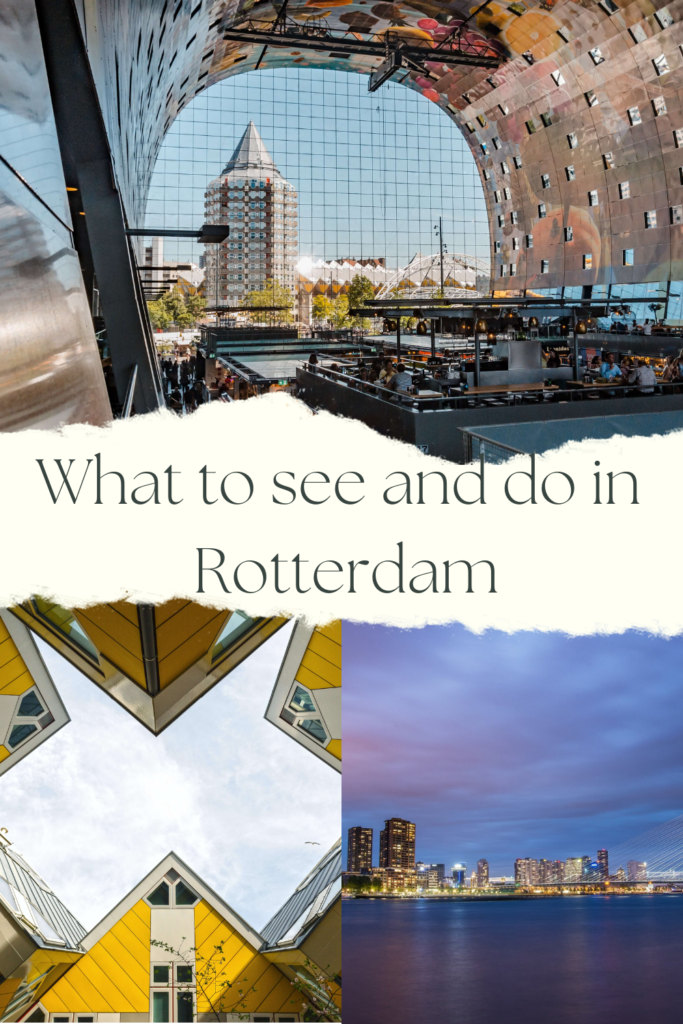
Here’s an outline from key locations:
Cars, buses and trains, the triumphant trio of travel. Providing a variety of choices:

For seamless travel, meet your flight-booking wizards.
Choosing accommodation is like selecting a travel companion—it shapes your journey.
Discover Cars, Buses, and Trains for a journey as memorable as your destination.
Online ticketing platforms have revolutionized travel and entertainment experiences.
Simplifying transactions and currency exchange for a smooth travel money experience.
Credit cards offer benefits like rewards and are useful for easy transactions or purchases.
Providing comprehensive coverage and protection for travelers globally.
Encrypting your connection, hides your IP address, and defense against cyber threats.