
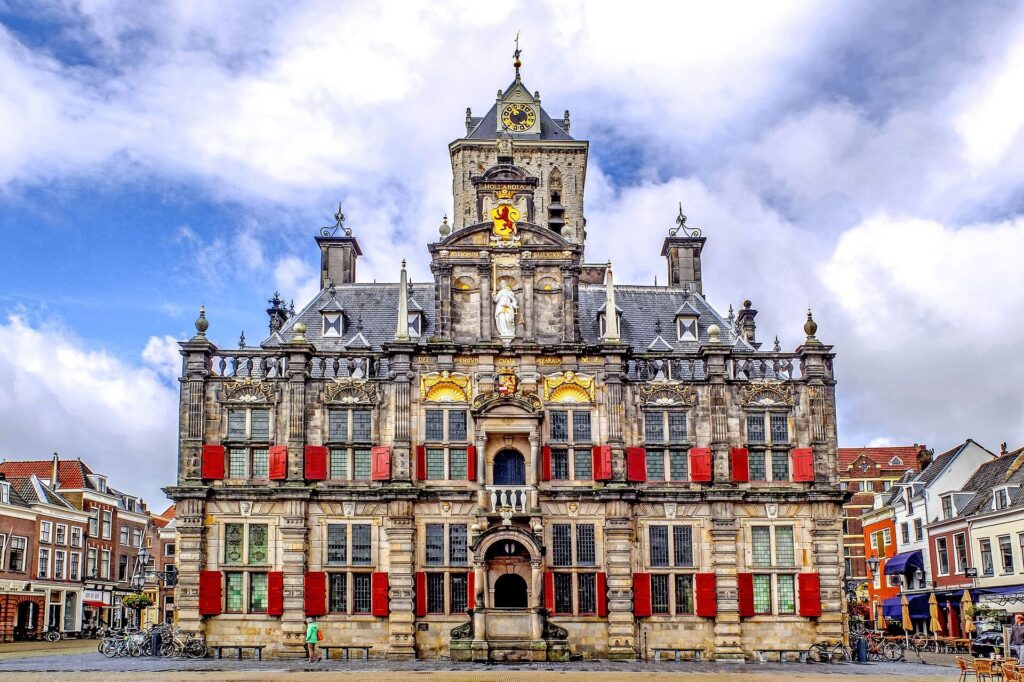
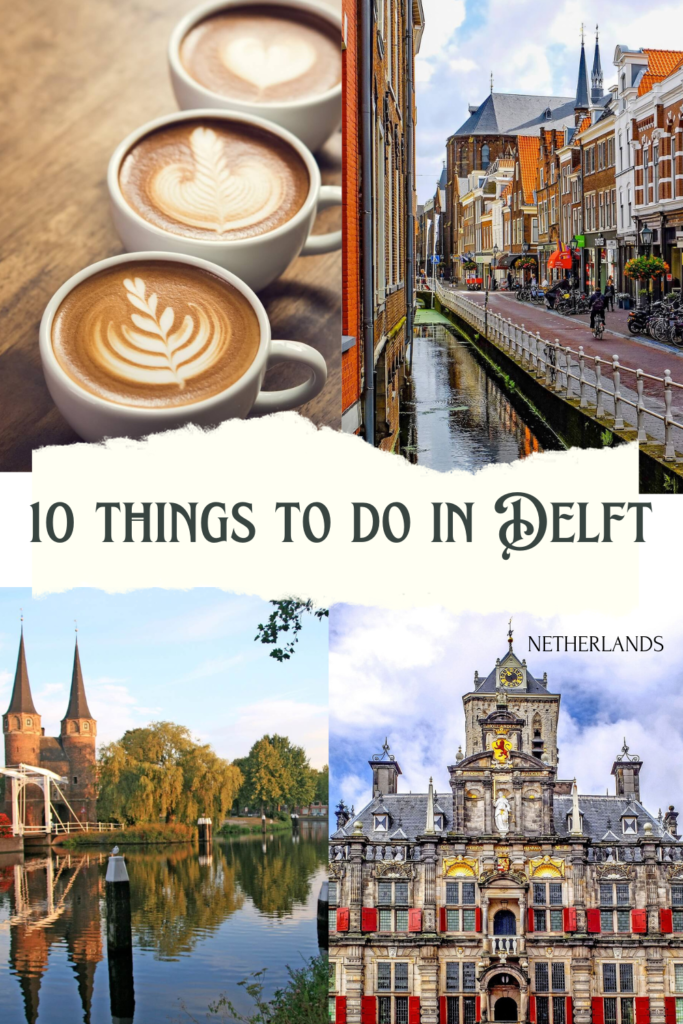
The Delft City Hall serves as an example of Dutch Renaissance architecture from the 17th century. Marvel the bell tower and sandstone walls.
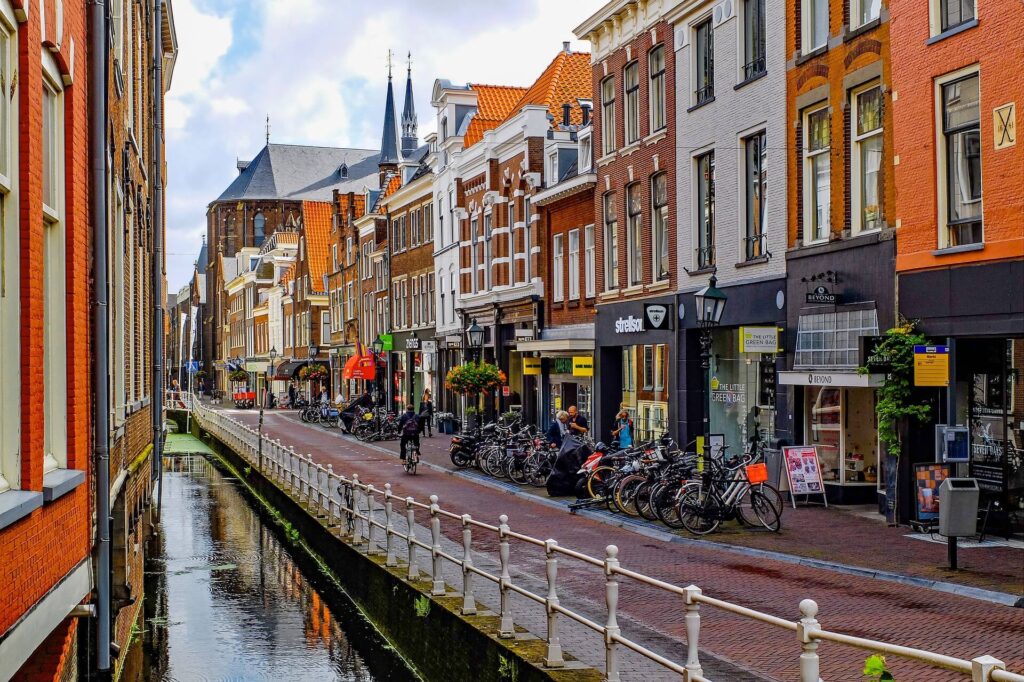
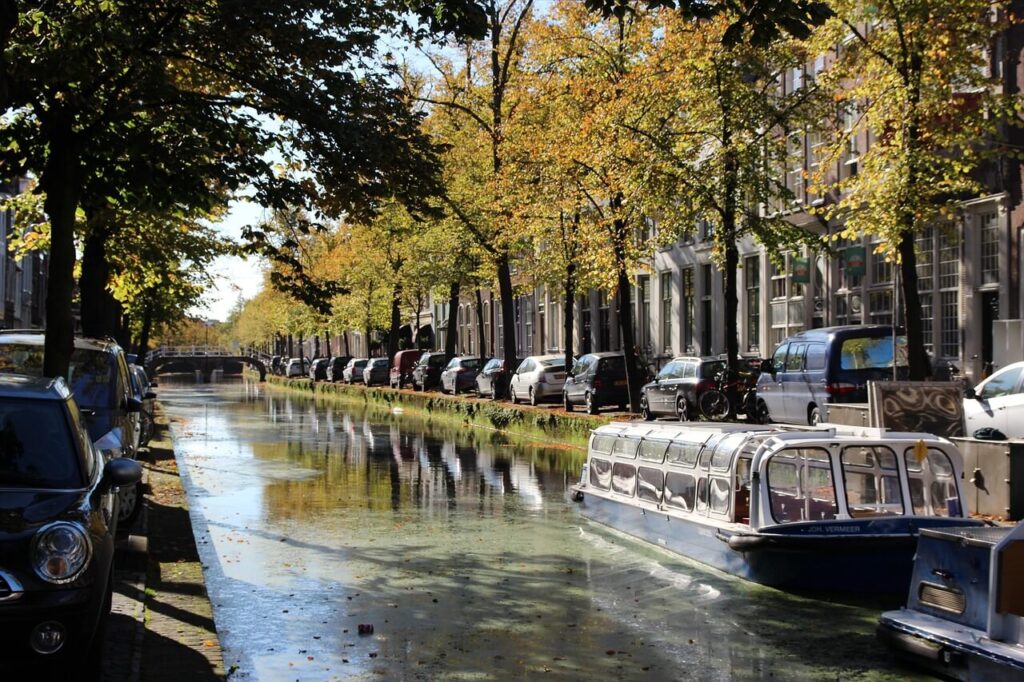
Delft owns many beautiful waterways that visitors can explore on canal boat trips. While gliding past several historical sights.
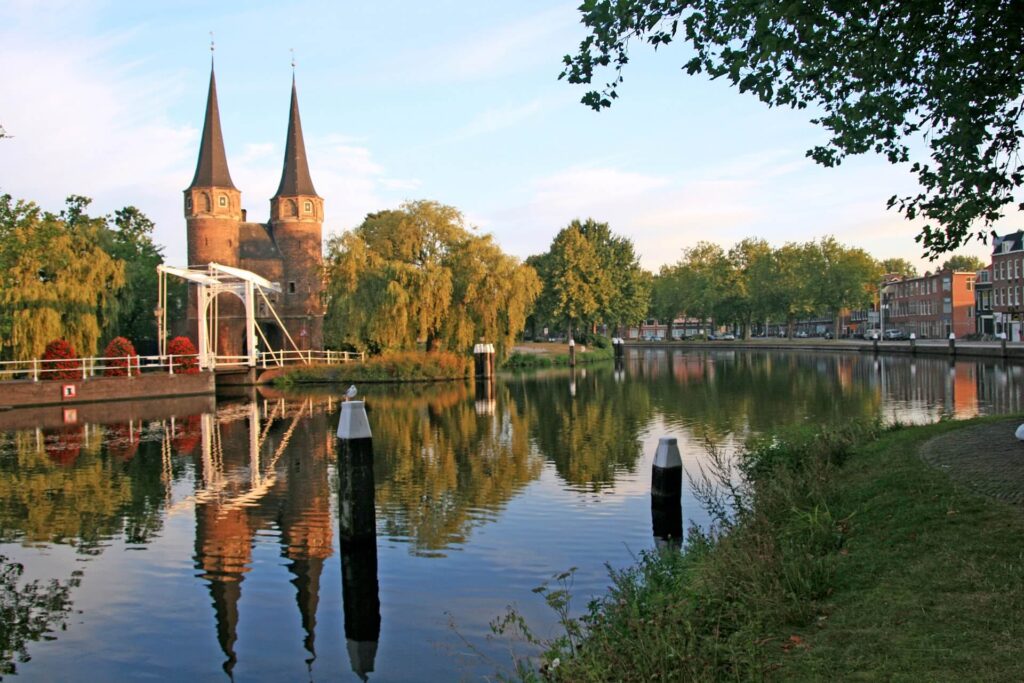
Oostpoort dates back to the 16th century, as a gate that once guarded Delft’s city wall. See the archway flanked by two towers and a drawbridge.
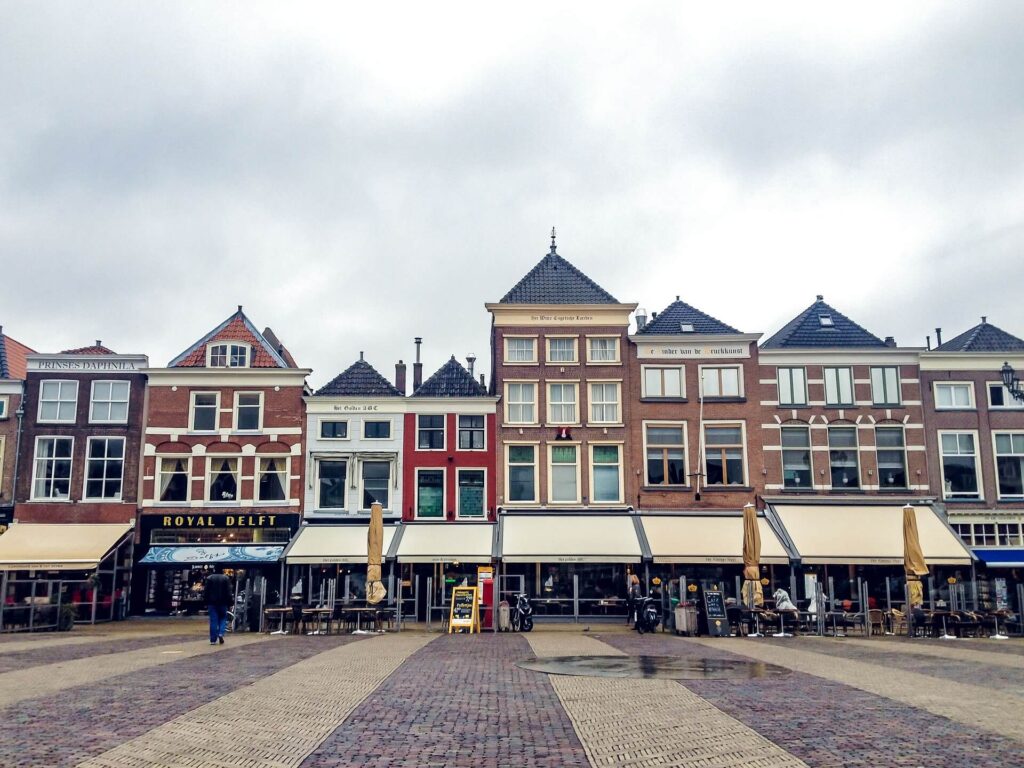
The Market Square serves as the main square of Delft and the social, economic center. Surrounded by lovely cafes, restaurants and boutiques.
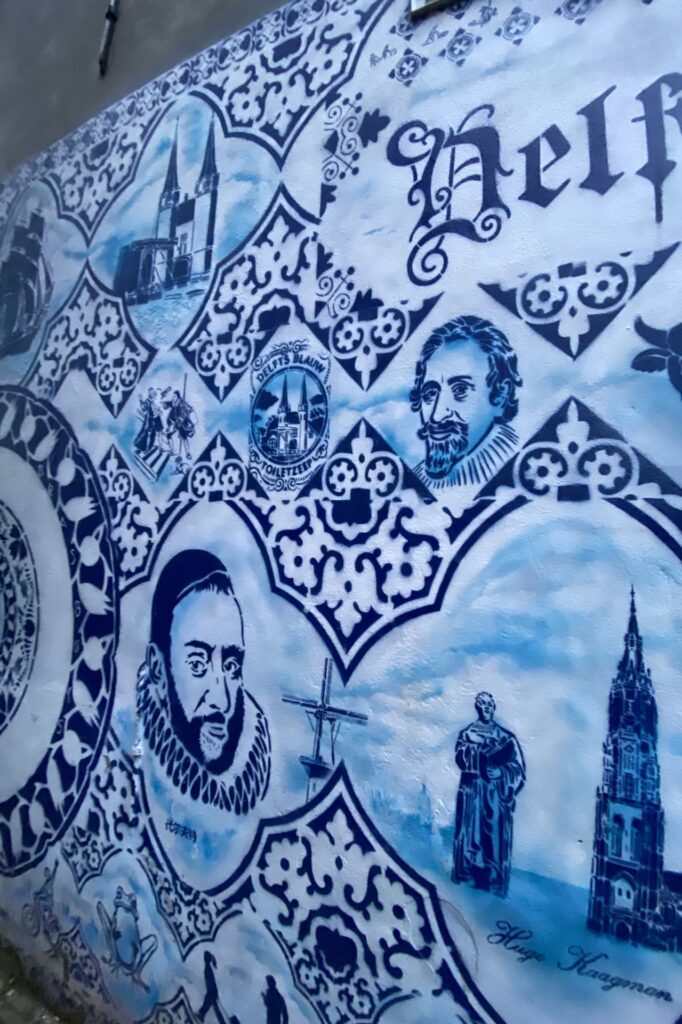
Since the 1653 the Royal Delft exists. Visitors admire the blue and white Dutch tiles covering its exterior walls.

Prinsenhofmuseum fills the former palace of William of Orange, with a large collection of objects from the Dutch Golden Age.
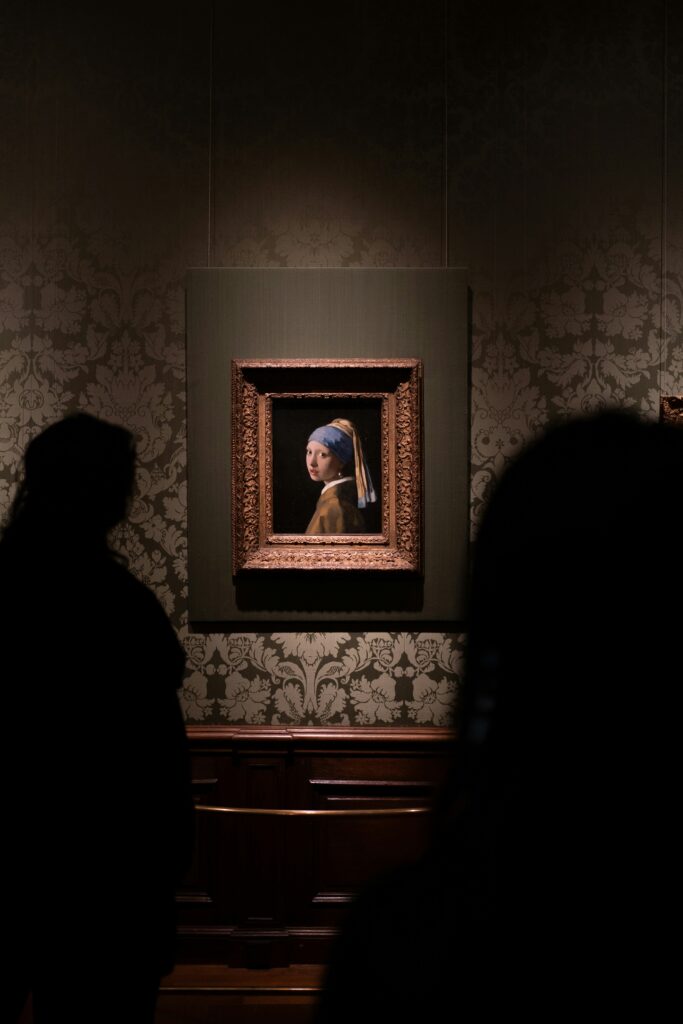
Discover the works of the famous Dutch painter “Johannes Vermeer”. The Vermeer Centrum Delft museum showcases his masterpieces.
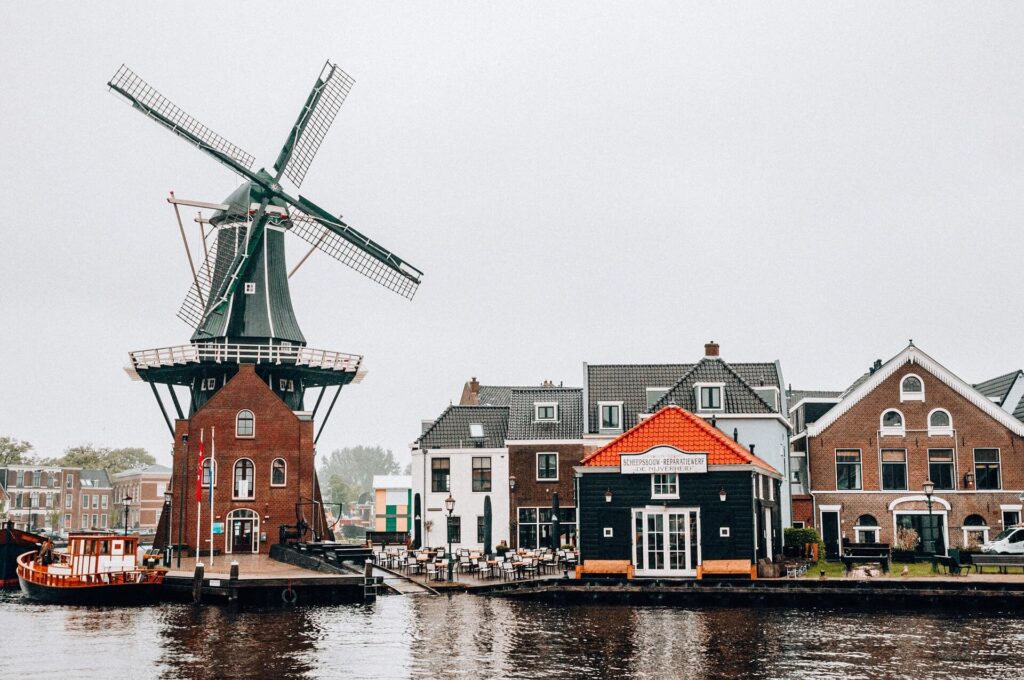
Built in 1737, Molen de Roos stands among the Netherlands oldest windmills. Visitors can ascend the tower for spectacular views of Delft.

The Netherlands largest and oldest technical university, TU Delft provides 30 degrees across engineering, science and architecture disciplines.

In the heart of Delft, Neef Rob Espresso & Theebar offers coffee, tea and pastries wrapped in charming vintage vibes.
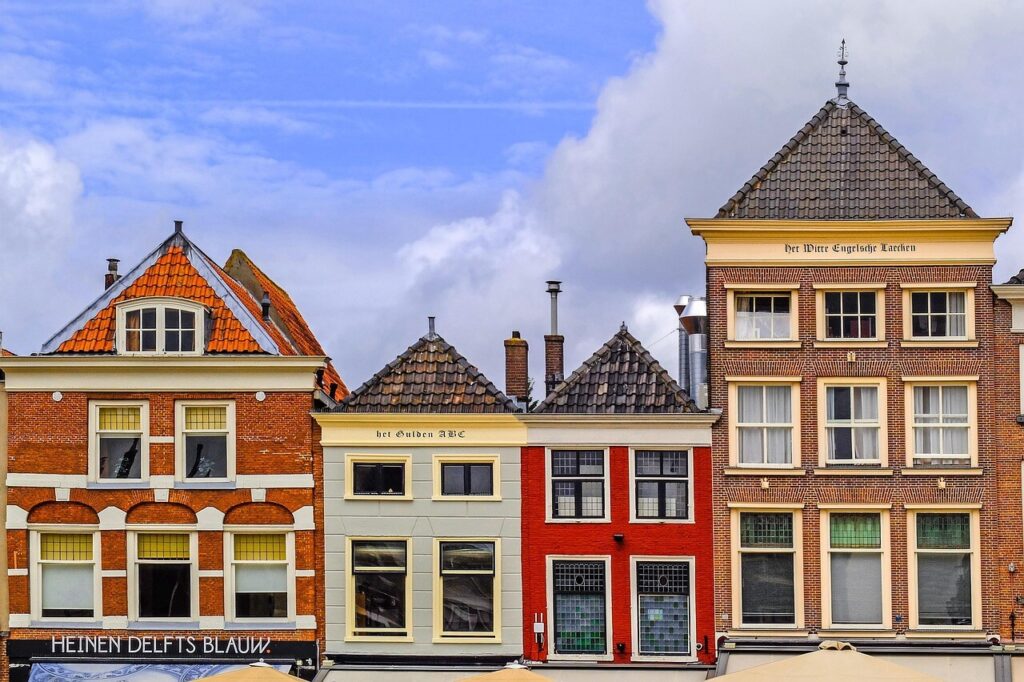
The Stadhuis anchors Delft’s Markt in a way that has nothing to do with its actual size, a Renaissance civic building whose red-shuttered facade has overseen city business since the early 1600s.
Located at Markt 87, directly across from the Nieuwe Kerk. The ground-floor hall is open to visitors during regular office hours on weekdays, free of charge, though guided access to the upper chambers requires scheduling through the tourism office. Early morning visits avoid the market-day crowds that fill the square on Thursdays.
Fire destroyed the original medieval town hall in 1618, sparing only its Gothic tower. Hendrick de Keyser, already busy designing the Nieuwe Kerk nearby, was brought in to rebuild it. He grafted a new facade onto that surviving 13th-century base rather than starting from nothing. The mismatch of styles defines history, not accident.
Look up at the roofline and you’ll find Justitia, sword and scales in hand, keeping watch over the square below. Wooden shutters painted a deep red frame the windows, a small maintenance choice that gives the whole building unusual warmth against grey Delft skies.
Inside, weddings are performed regularly, while administrative business continues even though most municipal offices relocated to the train station. Bells from the tower mark the hour, audible across the square.
Fifteen minutes covers the exterior and lobby, longer during a tour or ceremony. The stop rewards architecture and history buffs walking the Markt, though it’s easy to skip for those short on time.
Delft’s compact canal system turns a walk through the old town into something entirely different once you’re sitting a few feet below street level.
Boats leave from Koornmarkt 113 on the hour, seven days a week between 11am and 5pm, April through October. Standard cruises run 45 to 50 minutes and cost around €12.50 per person.
The city grew rich in the 17th century on trade through the Dutch East India Company and on the blue-and-white pottery that still carries its name. The canals were dug to move goods, not tourists, which explains why they weave so tightly between the houses. What catches most riders off guard is how low the bridges sit: guides duck on reflex, passengers follow a half second later, even under the ones with a foot of clearance to spare.
Skippers narrate in Dutch and English, sometimes German, working through the same roll call every guide reaches for: Delft Blue pottery, the VOC and Johannes Vermeer. Two of the four boats run fully electric, so the loudest sound for stretches is water against the hull rather than an engine. Reeds occasionally scrape the sides in the narrower channels near the old quarter, close enough to touch. Guide quality varies boat to boat, a livelier skipper makes the difference between a scenic ride and a genuine history lesson.
Budget an hour including boarding. Treat it as a warm-up to walking Delft, not a substitute for it.
Two brick towers frame the road like sentries that forgot to retire.
Oostpoort stands as the last city gate remaining in Delft, the sole survivor of eight that once ringed the town. The eastern edge of the old center holds the gate, a 15-minute walk from the train station. No ticket or fixed schedule applies, since visitors view the gate from outside rather than entering it. Dawn or dusk offers the best light, when the brick towers catch the glow over the water.
Builders raised the structure, then known as St. Catherine’s Gate, around 1400, as Delft expanded into a prosperous trading town within the county of Holland. Around 1510 the twin towers gained an extra octagonal story and the steep Gothic spires that now define the skyline.
Fire spared this corner of the city in 1536. Demolition spared it again in the 1840s, when the other seven gates came down. Restoration followed in the 1960s, repairing what the centuries had worn away. A private residence and small art gallery occupy the upper floors today. Below, an iron drawbridge, the Kleine Oostpoortbrug, still carries traffic across the water. Ducks gather in the moat beneath, unbothered by tourists leaning over the railing for photos.
The two tall towers flank a central archway where traffic once passed through the city’s defensive walls, their small windows once doubling as firing loopholes. Those walls came down centuries ago, leaving the gate standing alone now, like a piece of history someone lifted and set down in the middle of a neighborhood.
Oostpoort rewards a quick stop, ideal for anyone tracing Delft’s fortified past or comparing it to the Rotterdam Gate Vermeer once painted, a near-twin that no longer survives.
Delft’s Markt ranks among Europe’s largest historic squares, a stone rectangle roughly 120 by 50 metres, a church at one end and a city hall at the other.
Located in the centre of the old town, 10 minutes walk from Delft station, free and never closed. The goods market fills it on Thursdays, 9am to 5pm. Saturdays stay quieter, though antique stalls line the canals nearby from spring into autumn. Trade has run here since the 12th century, when the square amounted to an unpaved field beside the count’s court. Paving arrived in 1484. The Nieuwe Kerk, on the east side, holds the tomb of William of Orange and the royal crypt of the House of Orange-Nassau. That explains how a small city’s square carries national weight.
Look up from the city hall’s red shutters and you’ll find a dark stone belfry cutting through the middle of them, a medieval tower that outlived the fire of 1618. Hendrick de Keyser built his Renaissance facade around whatever the flames left standing.
On a Thursday, sound arrives first: carillon bells, stall frames scraping over brick, gulls working the fish counters. The stalls carry cheese, nuts, cut flowers and cheap socks by the crate, but the longest queue forms at the fried kibbeling. Off-market, the square empties and feels twice the size. Terraces run down both long sides, their chairs turned out toward the open space rather than in toward the tables. A bronze Hugo Grotius stands at the east end as shoppers cut past his plinth.
An hour covers the square. Give it two if you climb the Nieuwe Kerk tower, which repays the extra hour. Try the raw herring if you’re brave or buy a wedge of aged Gouda if you’re not.
Since 1653, Royal Delft has outlasted the roughly 32 potteries it started among to become the city’s last working one.
You’ll find it at Rotterdamseweg 196, a 15-minute walk from Delft station or a short hop on a local bus. Doors open daily from around 9 in the morning until 5 in the afternoon. Adult tickets sit in the mid-teens of euros, with cheaper rates for students and children. The audio guide comes in 8 languages.
Founded in 1653 as De Porceleyne Fles, the factory grew out of Dutch attempts to imitate the Chinese porcelain arriving on East India Company ships. The “Royal“ prefix arrived in 1919, a nod to the company’s ties with the Dutch royal family. Every piece is still hand-painted. Royal Delft includes the factory, a museum and a showroom.
In the near-silent production hall, the painters barely glance up as visitors drift by. The museum galleries hold centuries of tiles, vases and a life-size Delft Blue reproduction of Rembrandt’s Night Watch. A courtyard garden and Brasserie1653 offer somewhere to pause, while the flagship shop tempts you and empties your wallet in equal measure.
Allow 90 minutes to 2 hours. Anyone curious about craft or Dutch history will leave satisfied, but plan it as a proper stop rather than a quick detour between canals.
The bullet holes remain in the wall. Two small dark marks where a man was murdered and a nation changed.
Museum Prinsenhof Delft sits on Sint Agathaplein, just behind the Oude Kerk and about 8 minutes from Delft Centraal. Unfortunately the galleries are closed for renovation until 2027, so there are no tickets or opening hours right now. When it was open, adult admission ran to the mid-teens in euros with under-18s free.
Museum Prinsenhof occupies the former convent where William of Orange lived and worked during the Dutch revolt against Spanish rule. In 1584 he was assassinated here in the hallway. The bullet holes in the stairwell wall are preserved behind glass.
The museum tells the story of the Eighty Years War, the birth of the Netherlands and the life of William of Orange. Set in a former convent from around 1400, with a quiet courtyard garden, it opened as a municipal museum in 1911.
The collection reaches from Golden Age portraits and tapestries to civic silver and rooms of tin-glazed Delftware. During the renovation it has been dispersed across the city and region, with masterpieces lent to venues such as Royal Delft.
Once it reopens, budget about 90 minutes. The museum rewards anyone drawn to Dutch history or 17th-century painting while staying calmer than the big Amsterdam museums.
He painted only thirty-six known works in his lifetime. Most of them happened in rooms within walking distance of where you’re standing now.
Situated in the center at Voldersgracht 21, a short walk from the Markt, open daily from 10am to 5pm. Adult tickets cost about €12. The free audio guide covers eight languages, German included. Come early to have the floors to yourself.
Discover an information center rather than a museum, the Vermeer Center holds no original paintings. Instead the exhibition traces the life and techniques of Johannes Vermeer, who spent his whole life in Delft. Born here in 1632, he worked as an artist and art dealer and died in debt in 1675. The building stands on the site of the old Guild of Saint Luke, where he registered as a master painter in 1653.
Reproductions of every attributed painting hang at their true dimensions, with detailed notes on his use of light, color and possibly a camera obscura. Here, remains the only spot in the world to see his complete work together. Interactive exhibits demonstrate his techniques. Other sections explore the 17th-century Delft of Van Leeuwenhoek and Fabritius and ask why this small city produced extraordinary art.
Girl with a Pearl Earring hangs smaller than you picture. The route climbs chronologically through his career, past a reconstructed studio, a camera obscura you can look through and panels that decode the hidden glances and symbols in his scenes. Along the way you meet 17th-century Delft itself, the city of Van Leeuwenhoek and Fabritius.
Plan on an hour. Go for the story of how Vermeer saw and painted, not for the paintings themselves, those live in other cities.
Of the 18 windmills that once worked in Delft, only Molen de Roos still stands and it still grinds organic grain into flour every week.
Windmill de Roos sits on the northern edge of Delft along the old city fortifications. Built in 1679 it originally ground grain. Admission is free. The mill opens to visitors on Wednesday and Friday afternoons and on Saturday from mid-morning, though a windy day is the one to pick, since that’s when the sails actually turn.
The mill stopped commercial operation in the 1920s, but was restored and now functions as a working monument operated by volunteers. It stands eight stories tall. The mechanism inside still works. When wind conditions are right the sails turn and the massive millstones grind grain into flour. Before you step inside, look up, the resting angle of the sails is a language of its own, signalling celebration, mourning, or simply that the miller has knocked off for the day.
Inside, you climb seven floors of wooden stairs so steep you’re told to face them coming down as well as going up. The guides explain the gears and grindstones without rushing you. The ground-floor shop sells flour alongside bread, buns and baking supplies. From the upper levels, the view opens over canals, red rooftops and the towers of the Nieuwe and Oude Kerk.
People come to Delft University of Technology for the buildings, led by a library buried beneath a grass roof you can walk on.
Southeast of the old town, the campus sits a short bus or bike ride from Delft’s station. The grounds are free to wander and busiest on term-time weekdays, when the library opens to visitors. The university’s science center runs the architecture tours, which are ticketed.
Founded in 1842 by King William II to train engineers and civil servants, TU Delft is now the Netherlands oldest and largest technical university, with roughly 26,000 students across 8 faculties. Research labs work on everything from water management to aerospace engineering. Its motto “Challenge the Future“ stretches over a campus the size of a city district.
Most visitors photograph the library’s green roof and walk right past the steel cone punched through it like a pushpin, its glazed tip pouring daylight into the central hall. The library, by the Dutch firm Mecanoo and finished in 1997, lands on international “most beautiful library” lists.
Step through the doors and a wall of books climbs a deep blue backdrop, with silent reading rooms spiraling up the inside of the cone above. Across the lawn sits the Aula, a brutalist auditorium from the 1960s. At the campus edge, Echo, opened in 2022, makes more energy than it uses.
Part specialty coffee bar, part tea shop, part deli, Neef Rob has been named Delft’s best coffee spot four times.
Explore it at Choorstraat 34, a short walk from the Oude Kerk. Doors are open Tuesday through Saturday, 10 to 5, with a shorter noon-to-5 stretch on Sundays and a full close on Mondays. Coffee and cake won’t dent your wallet, with most people spending €10 to €20 per person. Reservations are possible but rarely needed for a drink.
The two shopfronts date to 1795, which shows in the low ceilings and the worn, lived-in interior. Rob roasts 18 of his own coffee blends and stocks more than 100 loose teas, all mixed in-house rather than bought wholesale. Look for the deli counter near the entrance. Handmade nougat is stacked in slabs beside Sicilian cannoli and rows of bonbons. Few people make it to a table without stopping to look.
The smell reaches you first, roasted beans layered over chocolate and citrus tea. Order a flat white with the lemon-hazelnut cannoli, or work through the tea list, where the milky oolong and black caramel draw the most repeat orders.
There’s a street terrace out front and a quieter garden terrace behind, plus plush seating indoors for a slow afternoon. The owner tends to hold court, steering newcomers toward whatever he thinks they’ll like. One catch, laptops get a cold reception on busy weekends, so plan any work session for a weekday.
Here’s an outline from key locations:
Cars, buses and trains, the triumphant trio of travel. Providing a variety of choices:

For seamless travel, meet your flight-booking wizards.
Choosing accommodation is like selecting a travel companion—it shapes your journey.
Discover Cars, Buses, and Trains for a journey as memorable as your destination.
Online ticketing platforms have revolutionized travel and entertainment experiences.
Simplifying transactions and currency exchange for a smooth travel money experience.
Credit cards offer benefits like rewards and are useful for easy transactions or purchases.
Providing comprehensive coverage and protection for travelers globally.
Encrypting your connection, hides your IP address, and defense against cyber threats.